
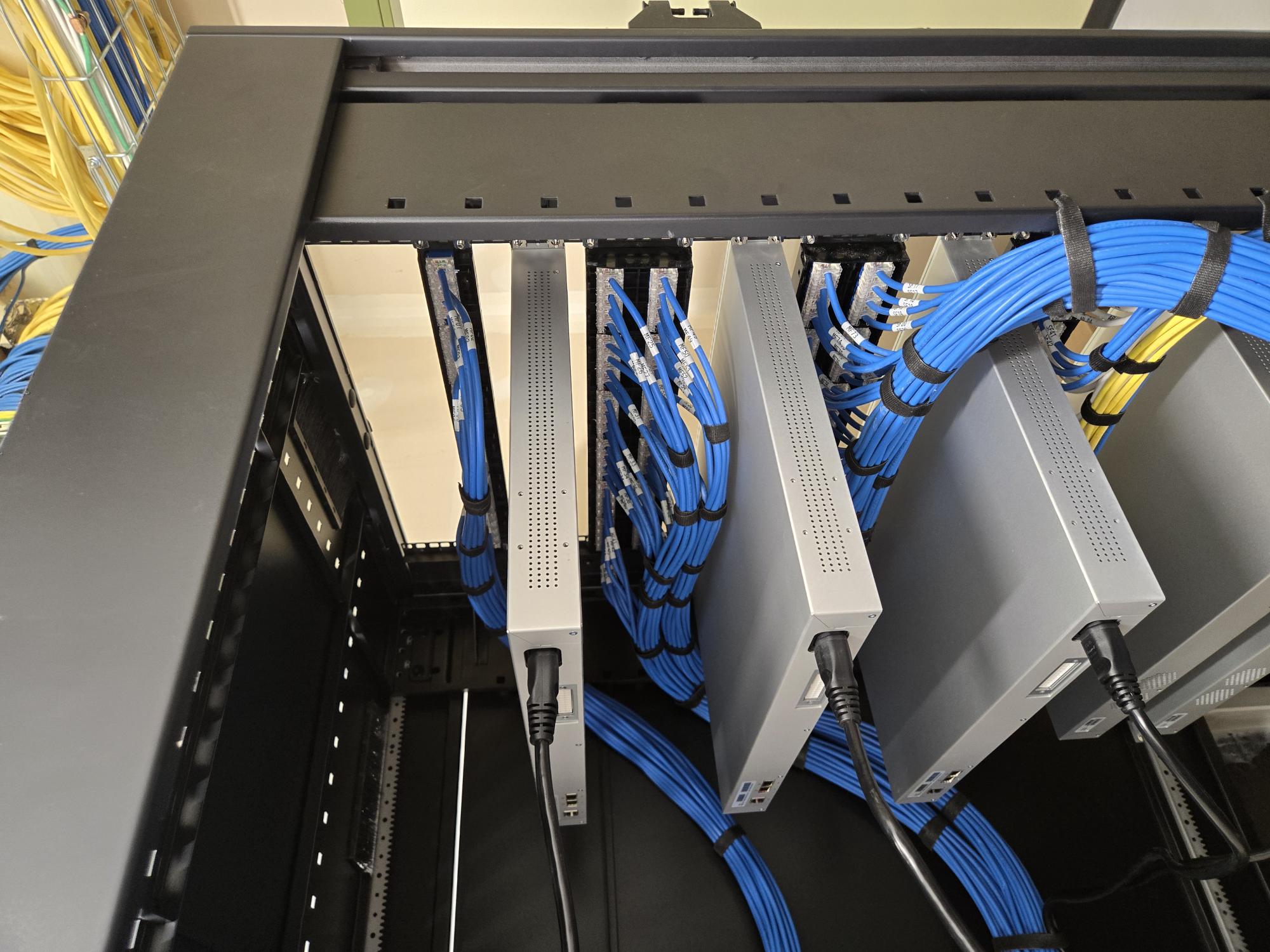
When we quote a cabling job, one of the first questions is copper, fibre, or both. The right answer depends on distance, bandwidth, and what the cable needs to do.
Copper cabling, usually Cat6 or Cat6A, handles most everyday connections: workstations, cameras, access points, phones. It is cost effective, and it can carry power as well as data, so a single cable can run a camera or a wireless access point over Power over Ethernet. The tradeoff is distance. Past about 100 metres, copper runs out of room.
Fibre is built for the long runs and the heavy lifting: the backbone between floors, the link between buildings, and anywhere you need high bandwidth over distance. It is immune to electrical interference, which matters in industrial spaces full of motors and drives.
Most buildings we wire use both: fibre for the backbone, copper for the drops. The part worth getting right up front is capacity. Cable is cheap compared to the labour and disruption of pulling it again in three years, so we size the install for where the building is going, not just where it is today.